
Starting parsley from seed can be done in a few different ways. This post will outline each one so you can choose what works best for you.
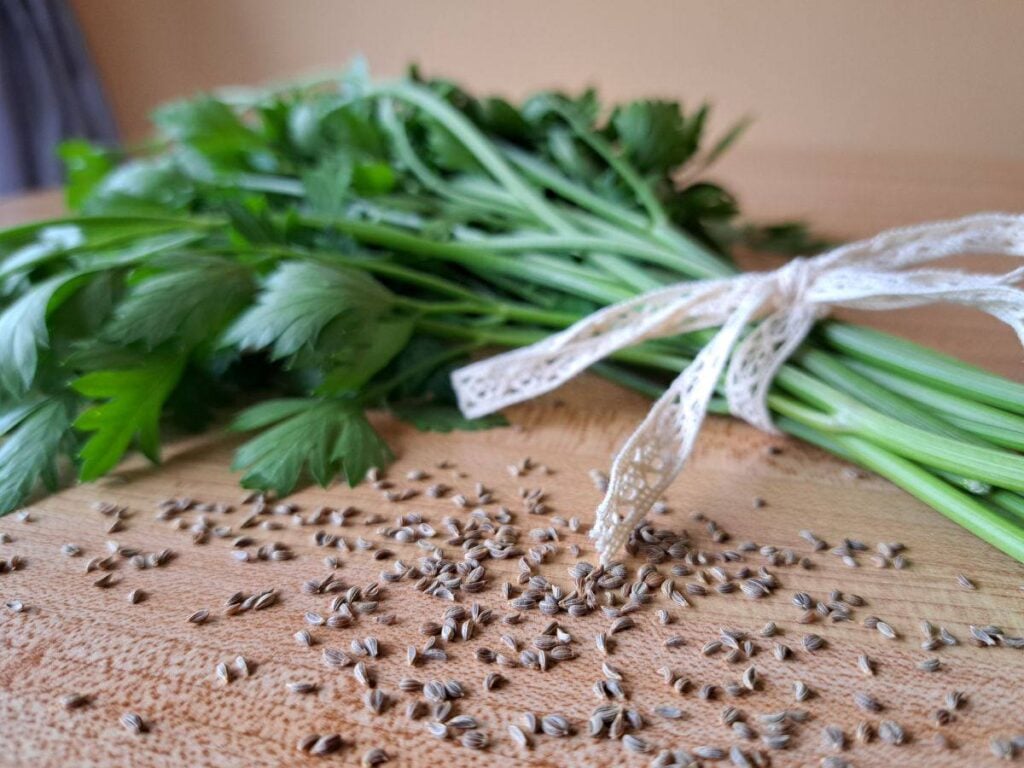
Who doesn’t love parsley? It is an amazing addition to your kitchen, and preserves really well too. Plus, it is a very easy herb to care for.
There are two main types of parsley. Flat leaf or ‘Italian parsley’ (my favourite) and curly leaf parsley.
I have never really cared for curly leaf parsley myself… I think it is a texture thing. Either way, both types have a great flavour and can be used in so many different ways.
Parsley is often grown as an annual herb. If you leave it in your garden for a second year, it will go to seed and you will get less leaves as it will focus on producing flowers and seeds.
I once let my second year parsley flower and and spread seeds. I was amazed the following year when I ended up with a full garden of parsley. It even came up between my patio stones! Talk about a hardy herb.
It was very easy to pull out any plants that I didn’t want. And then I was left with a ton of parsley in my herb garden with zero effort. This was great as I could preserve some parsley for over the winter months.
Now let’s get on to what you came here for and learn to grow parsley from seed!
Table of Contents:
- Quick Reference to Planting Parsley Seeds
- Why Grow Parsley from Seed
- Growing Parsley from Seed Indoors
- Starting Parsley from Seed Outdoors
- Winter Sowing Parsley Seeds
- FAQs
Quick REference to Planting Parsley Seeds:
- planting depth: 1/4 inch (twice the seed width)
- Parsley seed germination time: 10 – 28 days
- temperature: 70 degrees F (21c)
- full sun to partial sun
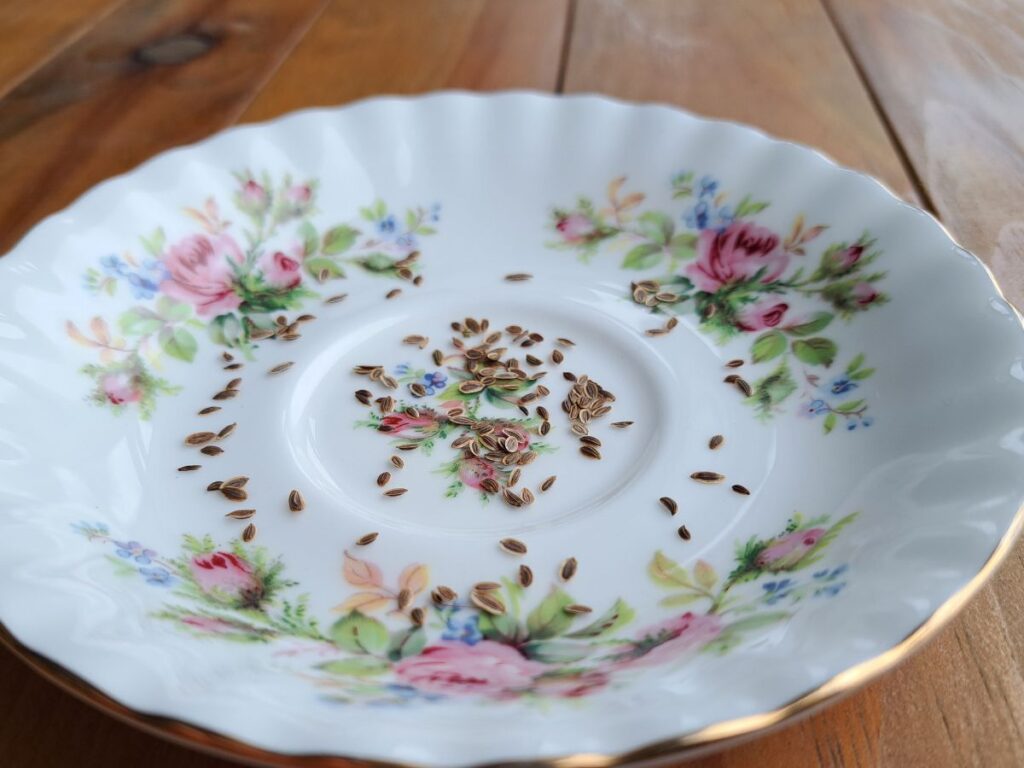
Why Grow Parsley from Seed?
There are so many benefits of starting parsley from seed.
First, you can grow parsley any time of year when you start from seed. So even if it is the middle of winter and freezing cold outside you can still enjoy fresh parsley in an indoor herb garden.
Second, it will save you money. It is way cheaper to start any herb from seed as opposed to buying fresh cut herbs from the grocery store or even started herb plants from a garden center.
Third, when you grow your own herbs at home the flavour and freshness will be way better than anything you could buy.
Lastly, I enjoy growing my herbs from seed because I can choose from many different varieties that you may not commonly find elsewhere. This way you can experience new flavours, or just pick a variety that will grow better in your area or growing conditions. Check out Richter’s Herbs for over 10 varieties of parsley to choose from.
Growing Parsley from Seed Indoors:
Growing parsley from seed indoors is perfect if you do not have an outdoor garden space, or if it is the middle of winter.
You can also easily start parsley seeds indoors and then move the plants outdoors when the weather is right.
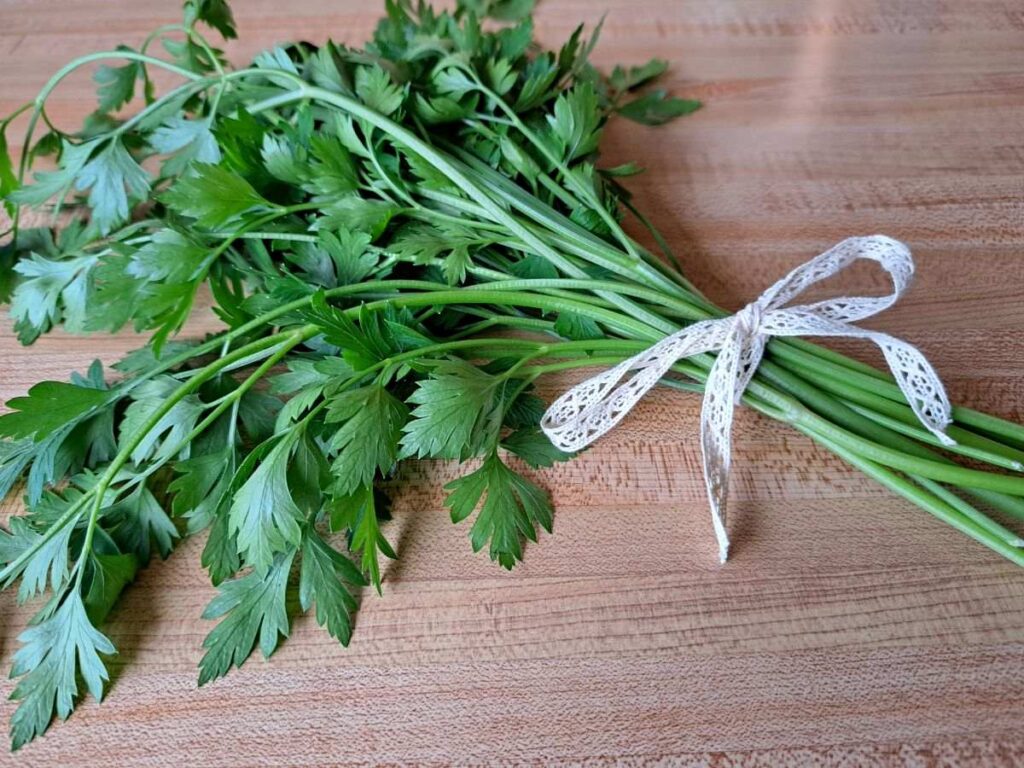
It is best to start your parsley seeds indoors about 6-8 weeks before you plan on moving the plants outside. If your parsley will be grown indoors the whole them, then you can start them whenever you like.
Here is what you need in order to start growing parsley from seed indoors…
Materials Needed:
- Parsley Seeds
- Potting soil
- Seed starting pot or tray
- Small watering can or spray bottle
- Grow lights or a bright south facing window
Steps:
- Pre-moisten your soil
- Fill your pot or seed starting tray to about a 1/4 from the top of the container
- Sprinkle seeds across the surface of the soil
- Cover the seeds with 1/4 inch of soil
- Water or mist over the top of the soil so it settles in nicely around the seeds
- Place some plastic wrap over the pot or tray to lock in the moisture and set in a warm spot in your home
- Once you see sprouts, remove the plastic wrap and place them under a grow light
Check your sprouts each day to see if they need water. If you notice the soil feels dry, is lighter in colour, or the container feels less heavy you will want to water.
It is very important not to overwater at this stage. The soil should be moist but not soggy. Your baby parsley will require a little less water at each watering when compared to a mature plant.
When the temperatures are above 10 degrees Celsius you can start to harden off your seedlings if you plan on moving them outside. Do this by introducing them to the outdoors for about 1 hour, and then slowly increase the time each day. I usually do this over a week or two.
Prepare a nice sunny spot in your garden by fluffing up the soil and adding some compost. Plant your seedlings after they have hardened off and temperatures are no longer dipping below freezing.
If you are growing your parsley in a kitchen herb garden, then make sure you have a good sized pot and just keep caring for them. Check out my complete guide to growing herbs indoors if you want more information on that.
Starting Parsley from Seed Outdoors:
If you do not want to invest in a lot of set up, then I would try starting parsley from seed outdoors. You can either do this in a pot in a patio herb garden, or by directly sowing seeds in the ground.
Find a nice sunny spot with good nutrients rich soil and then follow the steps below.
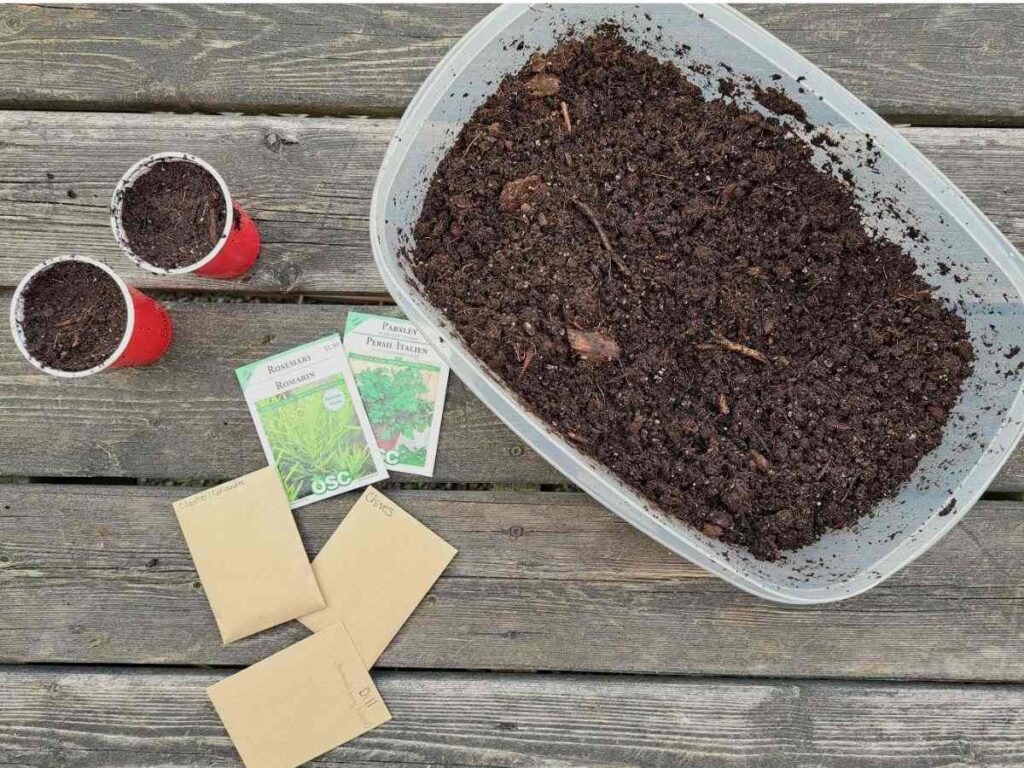
If you are starting your parsley seed outside in pots, then you will follow the same steps as starting indoors (outlined above). The only difference is that instead of a grow light, you will be using the sun.
Another difference is that you have outdoor weather conditions to consider and potential pests to deal with. For this reason, you will need to check in on your plants more often to see if they need water and are looking healthy.
Before direct sowing parsley seeds into your garden, make sure that the soil has warmed up and all chances of frost have passed.
You only need a few things to start parsley seeds in your herb garden, and it really is a simple process.
Materials Needed:
- Parsley Seeds
- Small hand rake
- Watering can or spray bottle
Steps:
- First choose a nice sunny spot and fluff up the soil with a hand rake
- Take a pinch of parsley seeds and lightly sprinkle them across the top of the soil
- Add a very light layer of soil over the top of the seeds to cover them about a 1/4 of an inch and press down
- Water or mist over the top of the soil so it settles in nicely around the seeds
- Optional: add a cover over the seeds, such as a wooden board or glass container (be sure to remove at the very first sign of sprouts)
Continue to watch closely and water when needed.
If you covered the seeds to lock in soil moisture it is so important to check on them daily and remove the board as soon as you see sprouts. This way they can get the sun light and grow big and strong.
You can thin your parsley sprouts if you want the plants to grow larger. I have also not thinned my parsley and it grew just fine. It was just a little shorter and the leaves were perhaps slightly smaller.
Winter Sowing Parsley seeds:
Materials Needed:
- large old plastic jugs (milk jugs/apple cider/water jugs)
- seeds
- potting mix
- duct tape
Steps:
- prepare your jugs by cutting around the base about 4 inches from the bottom or just below the handle, but don’t cut all the way around. Leave a small section at the handle to act as a hinge.
- Add some drainage holes to the bottom of your container with a nail and hammer or drill.
- Pre-moisten your potting mix first, then add some into the bottom of the plastic jug up to about a 1 inch from where you cut.
- Lightly sprinkle your seeds on the top of the soil.
- Add a thin layer of potting mix over top, gently press down, and water in.
- Take some duct tape and tape around the base where you made your cut so it is all nicely sealed.
- Leave your jug outside with the lid off in a spot that gets sun.
Your jug should get moisture from rain and snow, but still check on them once in a while to make sure the soil is staying moist.
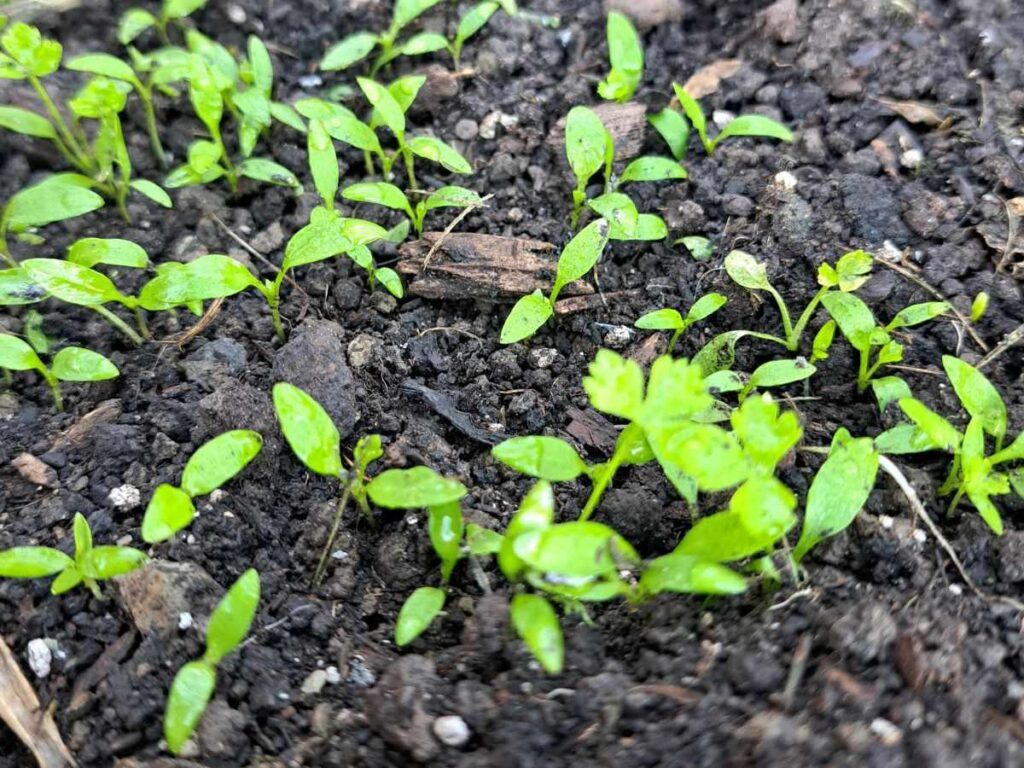
In about 10-28 days (depending on the temperature), you should see your first sprouts. Your parsley seeds will take the longest to sprout out of all the options mentioned in this article. Just have patience and they should sprout once the soil is warm enough for them.
Continue to care for your seedlings and as the weather warms up you can take the top off the container. Feel free to pull apart the plant so you get a few clumps to add to your garden or planters.
FAqs:
1. How long does parsley take to grow from seeds?
It can take up to 10 weeks to get your first harvest after planting parsley seeds. This will vary depending on the variety you plant, the conditions it is grown in, and the care you provide. Parsley can take a long time to germinate, but then it should really take off once it starts growing.
2. What is the fastest way to germinate parsley seeds?
The fastest and most reliable way to germinate parsley seeds is indoors. This way you have more control over the growing conditions and will not have any pests to deal with either.
Keep the soil consistently warm and moist. If you do this you should see the first sprouts within 2 – 4 weeks. You can also try soaking your seeds before planting them to see if that speeds up the process as well.
3. Do parsley seeds need to be soaked?
Parsley seeds do not need to be soaked before planting. This is generally done with larger seeds to help them absorb water and germinate faster. That being said…
You could give it a try to see if it speeds things up. Parsley can take a while to germinate, so if you like you could soak them overnight in warm water before planting.
4. Best time to plant parsley seeds?
You really need to know how you are starting your seeds to determine the correct timing.
I would start them about 6-8 weeks indoors before you want to plant them in your garden. If you are planting outside in the garden with no protection, then you would want to start them after your last frost.
If you are starting parsley from seed for an indoor herb garden then it does not matter when. When you are winter sowing, then you can start them a month or two before winter ends.
Now it’s your turn!
I hope you feel confident and inspired to go out and start some parsley from seed. Be sure to leave any extra questions in the comments.
Until next time!
Leave a Reply