
Learn all about the propagation of thyme by using cuttings. It is very easy to grow thyme from cuttings, so follow these simple steps to have more than enough for you and your family.
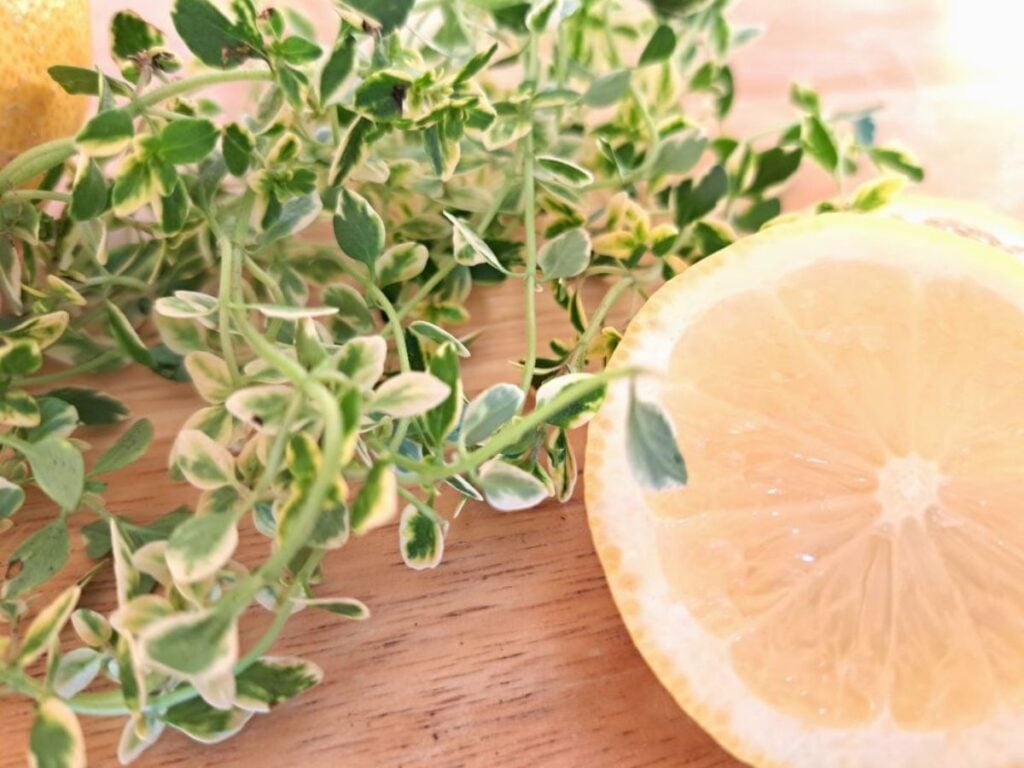
In this article, I am using lemon thyme as an example, but any variety of thyme will work in the same way.
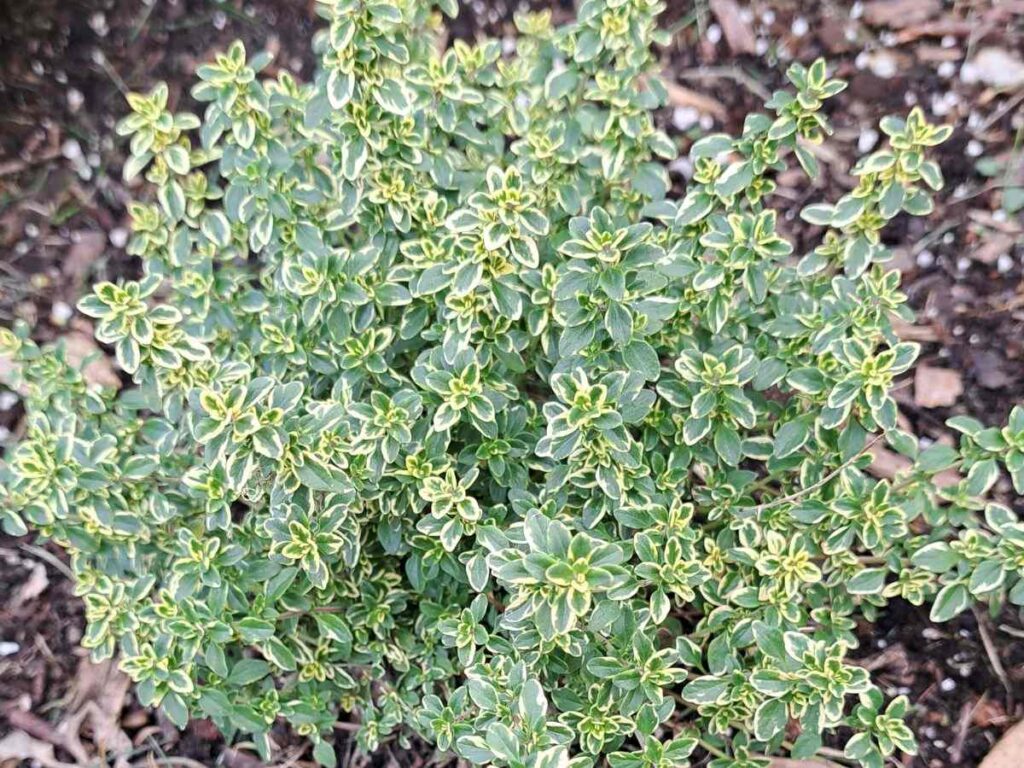
Lemon thyme grows 4-8” tall and is a perennial so it will come back year after year. It is an easy plant to grow and doesn’t demand much in terms of care. Now on to growing this lovely herb from cuttings.
You can either root thyme in water or soil. I have outlined the steps for both methods below.
Preparing Thyme Cuttings for Rooting:
First, before we get started, you will need some thyme cuttings. It is best to take cuttings from a mature thyme plant in late spring to early summer.
You can also use fresh grocery store thyme if you do not have access to a thyme plant. Or, find a friend that will let you harvest some off of their plant.
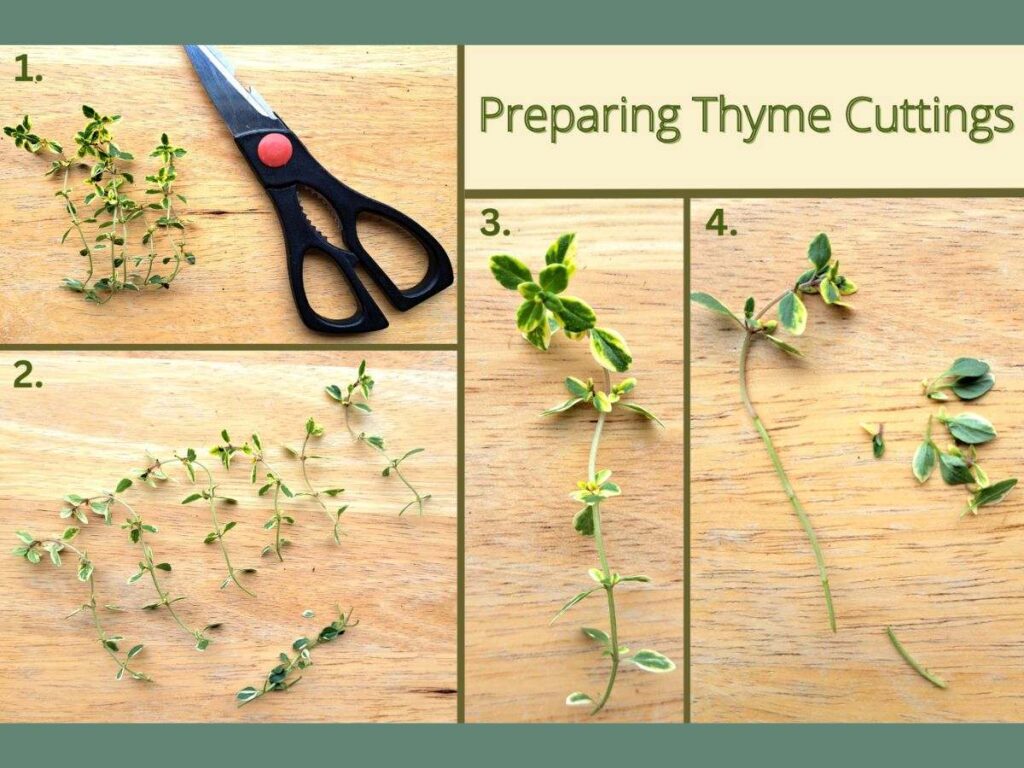
Using clean, sharp scissors, take 4-7 cuttings that are 2-3 inches long. Chose soft stems that have healthy, fresh growth. Make your cut at a 45 degree angle to let in the most water during rooting.
Lastly, make sure to trim off the lower leaves so that about half of the stem is bare. You don’t want to submerge or bury any leaves.
Steps to Propagate Thyme in Water:
- Put your cutting in a glass of distilled water and place in a sunny windowsill
- Tip: I like to put plastic wrap over the cup, poke it with a toothpick and then insert the stems into the holes to keep the stem upright, and the leaves out of the water
- Check your cuttings regularly for signs of roots, and change the water every few days to keep it fresh
- In about 4-6 weeks you will see roots
- Transfer your cuttings into a three inch pot with moist potting mix
- Once your plant has started to show leaf growth you know you have a well-established root system and can plant your lemon thyme into its final home
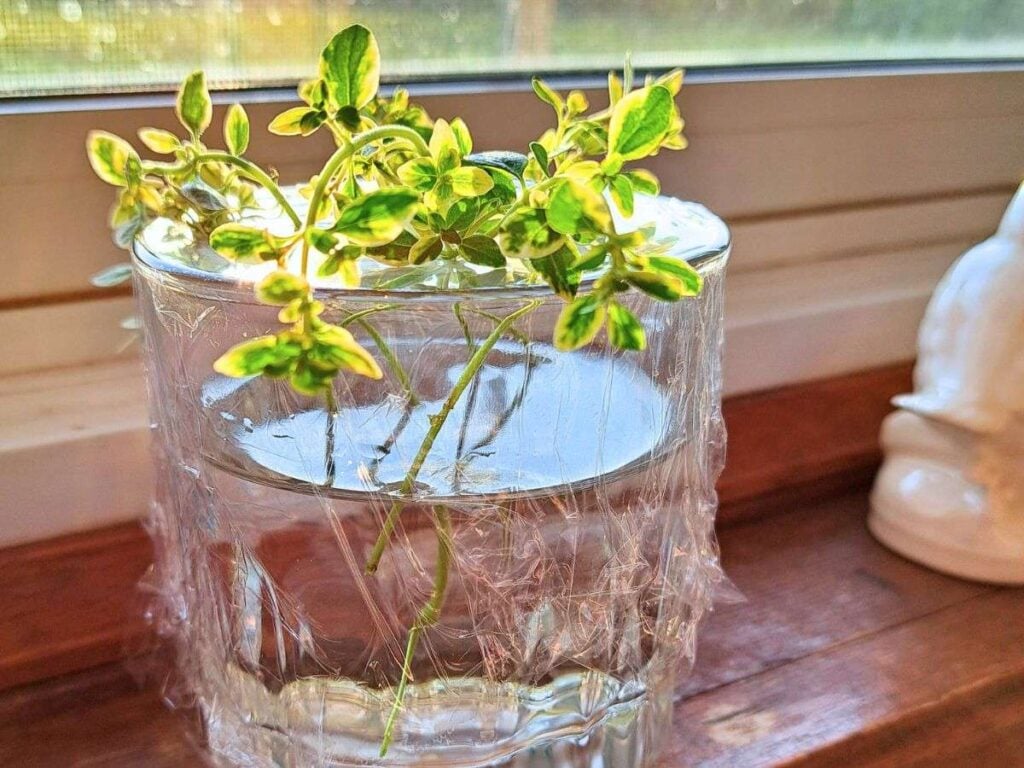
During the rooting phase it is important to check them regularly. I do this just for fun anyway to see if there are any new roots – sometimes more than once a day because you never know.
Steps to Propogate Thyme Cuttings in Soil:
- Choose good quality potting mix to provide plenty of air and water circulation (adding vermiculite can help)
- Water your soil very heavily a couple of hours before planting
- Insert the cuttings up to the first leaves (you may put multiple cuttings in one pot, just space them apart every 2 inches or so)
- In about 4-6 weeks they should be rooted
- Once your plant has started to show leaf growth you know you have a well-established root system and can plant your lemon thyme into their final home
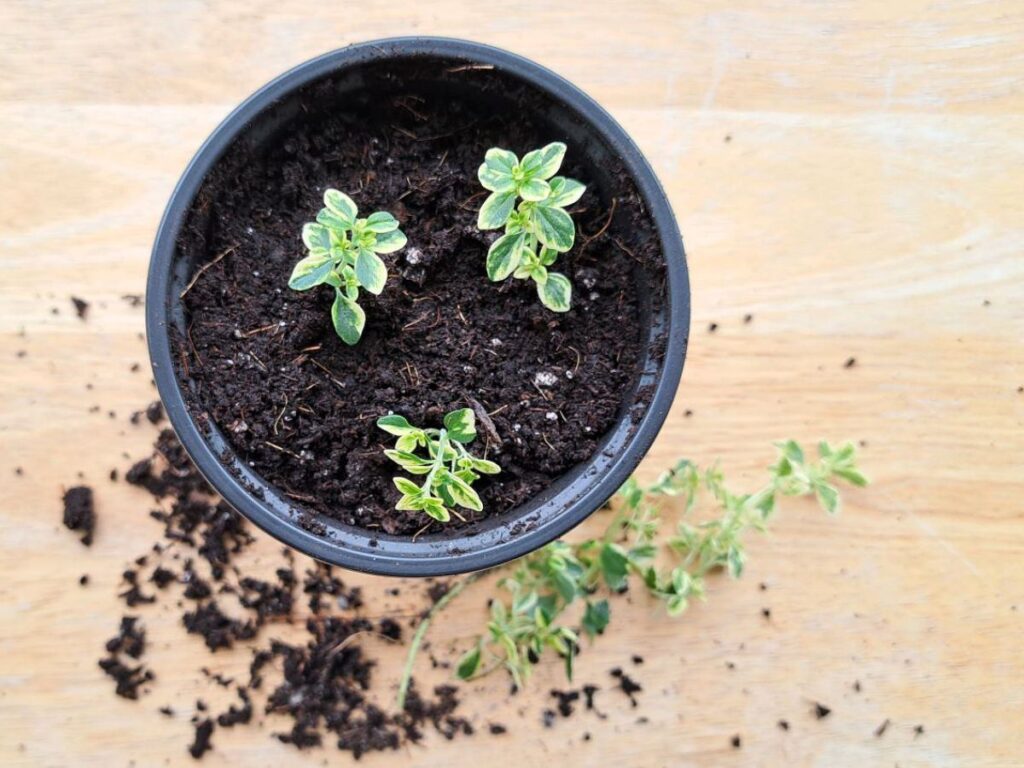
This method works best if you can keep the soil on the warmer side, either with a heat mat or warm sunny place in your home.
You will also benefit from using a plastic cover to create some extra humidity. Again, check your cuttings regularly to be sure everything is looking healthy. Keep the soil moist during this entire process.
Planting Thyme from Cuttings Once Rooted:
Your newly rooted thyme can be planted in a temporary nursery pot, a decorative container, or as part of a mason jar herb garden.
I have also had great success planting it directly out in the garden. Just be sure to water it very frequently for the first week after planting or choose a time when the weather is a little cloudy and rainy.
When planting, you will want to make a hole in the soil with your finger up to about your first knuckle. Gently place the stem and all the roots in the hole (it is ok if the roots curl up a bit). Plant high enough on the stem to cover the roots, and just below the first leaves.
Thyme is very drought tolerant. So, once it has adjusted to living in soil you can let it dry more in between watering. You can learn more about how often to water herbs here.
Plant your lemon thyme in an area that gets full sun, and you will have harvests for years to come. Once your thyme plant is established, you will want to regularly prune it. Learn more about pruning thyme here.
How Long do Thyme Cuttings Take to Root?
When rooting lemon thyme cuttings, it could be 4-6 weeks before you see the first roots appear. The entire process to grow lemon thyme from cuttings will take about 6-8 weeks before you have a stable plant.
As the name might imply thyme does take time to grow. But, you will have a much larger plant much faster by growing from cuttings instead of seeds.
Why Grow Thyme from Cuttings?
The main benefit of growing lemon thyme from cuttings is that it is much faster than growing it from seed. Also, you can save money by propagating thyme from cuttings – who doesn’t love that?
Another reason is that when you propagate thyme from cuttings you are essentially creating a clone of that plant. So, you will have an identical match to the parent. This is great if you have a particular thyme plant that you enjoy.
The Best Time of Year to Take Thyme Cuttings
The best time of year to take lemon thyme cuttings is in late spring to early summer. Pick new soft stems that have grown from the woody mature growth made the previous year.
Also, be sure to pick a stem that has the most colorful and beautiful leaves so that you may carry that on in the new plant.
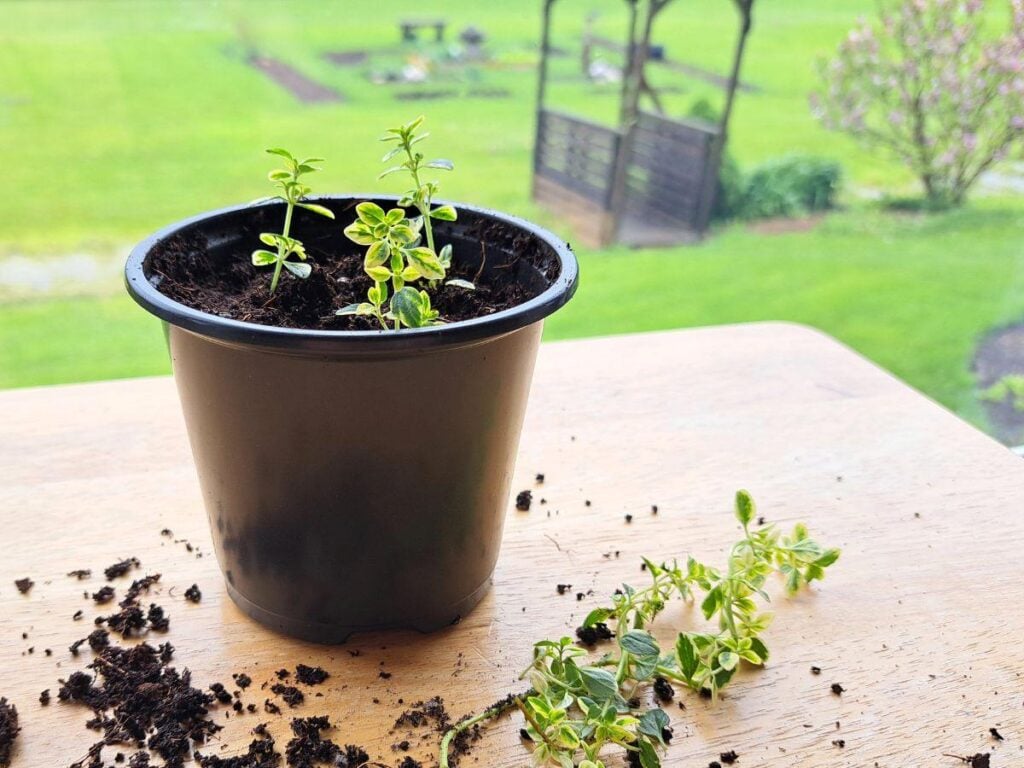
Take more cuttings than you need as some of them may not take root. It is important to have options to choose from when you are ready to plant. Pick ones with the biggest healthiest roots and nice green foliage.
By taking cuttings and starting the rooting process in the late spring to early summer it will give your newly rooted plants more time to grow and develop before the colder months of winter.
Growing Thyme from Grocery Store Cuttings
Yes, that’s right. You can use grocery store thyme cuttings to grow your own plants!
With fresh grocery store thyme, you will not know exactly which variety you have, but it will still produce an edible herb for you.
You can create many plants from just one little bundle. This is helpful if you want to grow a bunch of thyme, or gift some plants to your friends and family.
When you are looking for thyme at the store, try to pick the freshest herbs possible. When you get home, you will prepare the thyme cutting in the same way and then follow the same steps as outlined in this post.
Is it better to root thyme cuttings in water or soil?
You can have great success with the propagation of thyme cuttings in water or soil.
For me, I prefer the water method so I can see through my glass and know what is going on in there. I like to watch to make sure roots are forming and everything is looking healthy.
However, as with anything there are pros and cons to each method. I will let you be the judge, but here are some things to consider:
- with the soil method you will not be able to see how the roots are forming
- you will need more items to root your cuttings in soil as compared to water
- stems are more prone to rot using the water method (especially if you do not change the water out regularly)
- it can be more finicky to maintain the proper moisture levels in the soil, vs. just changing out some water in a glass
In the end, Lemon thyme (Thymus Citriodorus) is not only beautiful, but it is edible as well. It pairs so nicely with fish and chicken.
My husband and I love adding it to roasted chicken. That earthy, fresh, lemon flavor just can’t be beat. It can also be used in teas, desserts, soaps, perfumes, and sachets.
I hope this was helpful and that you feel inspired to go out and grow thyme from cuttings.
Comment below if you have ever grown thyme from cuttings, and if you prefer the soil or water method.
Pin For Later…
Mahmoud Soleymanpour says
Excellent.